A friend of mine bought a very old (1965) classical guitar model number 1663 made by a luthier with the initials R.M for the total sum of 50 pence. The guitar had a huge hole in the area of the tail stock and a friend of my friend repaired it with what looks like glass fibre. My friend brought the guitar for me to have a look at, if I said it was in very bad shape I would be understating the condition. The strings looked like they had been tied to the bridge by some crazy man on heroin. The saddle didn’t exist at all and when I pointed this out to my friend he felt sure that it was all as it was supposed to be. On further investigation the back of the bridge was ripped completely off the soundboard. The bridge was being held on by the front 10mm of the bridge. I think that sometime in the past someone had put steel strings on it and over the time that it was strung that way it was slowly peeling the bridge off the soundboard. I must admit I found it all rather amusing and interesting at the same time, I now have a little bit of experience of what happens when a classical guitar is strung with steel strings. It is good to have the chance to learn about this kind of thing and so I offered to repair the bridge and soundboard. I am not going to renovate this guitar, I am happy to leave the repair in the sides near the tail as it is, it feels solid enough. I just wanted to make it look reasonable and improve its playability.
Let’s have some pictures.
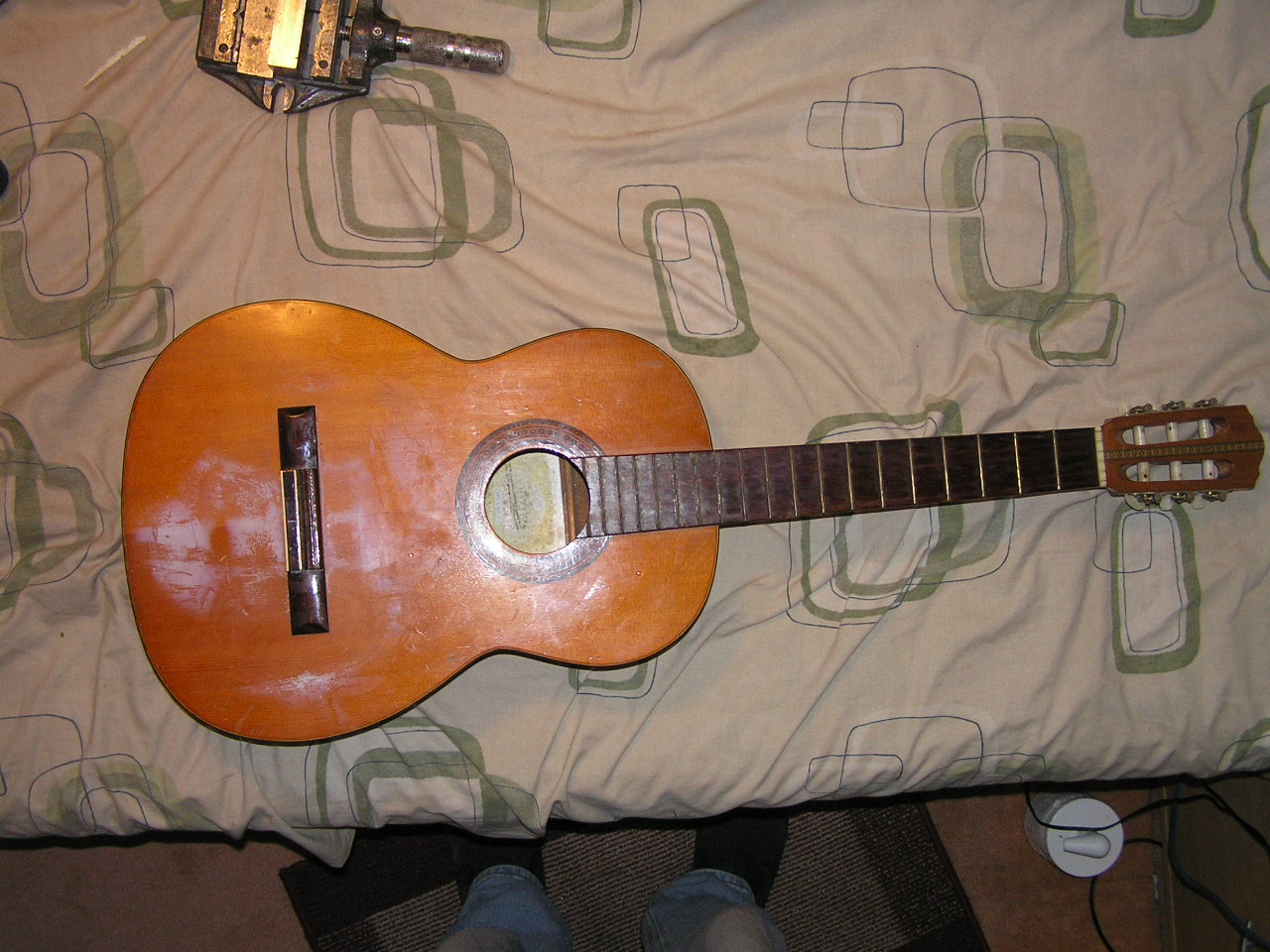
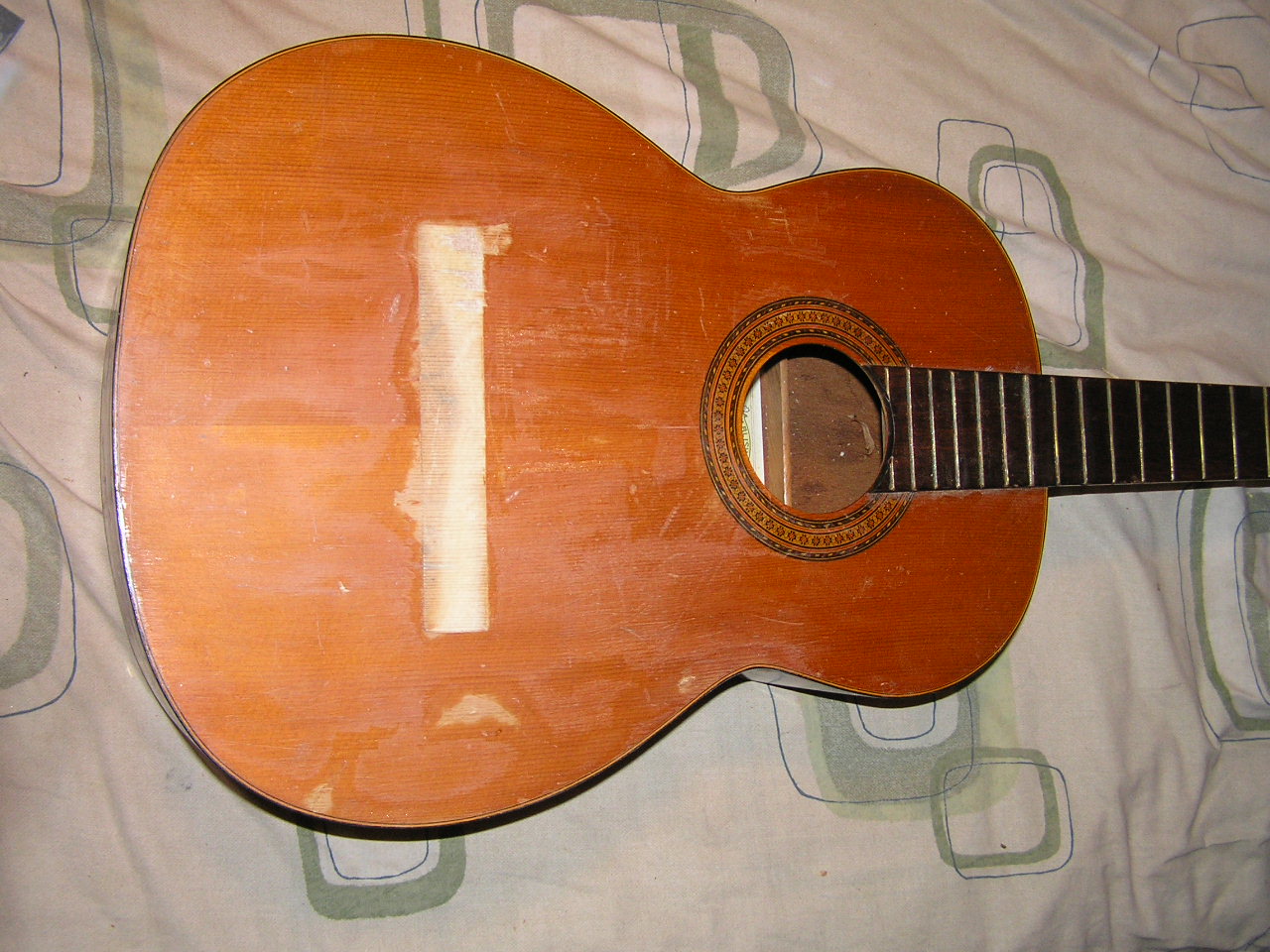 As can be seen I removed the bridge. I did this by soaking a towel in hot water and laid it on the bridge. I then placed my new £3.78 iron from tesco on full power and pumped steam from the iron into the towel pressing reasonably hard with the iron and especially onto the wings of the bridge. The bridge cam off easier than I expected but to be honest there wasn’t a great deal holding the bridge on.
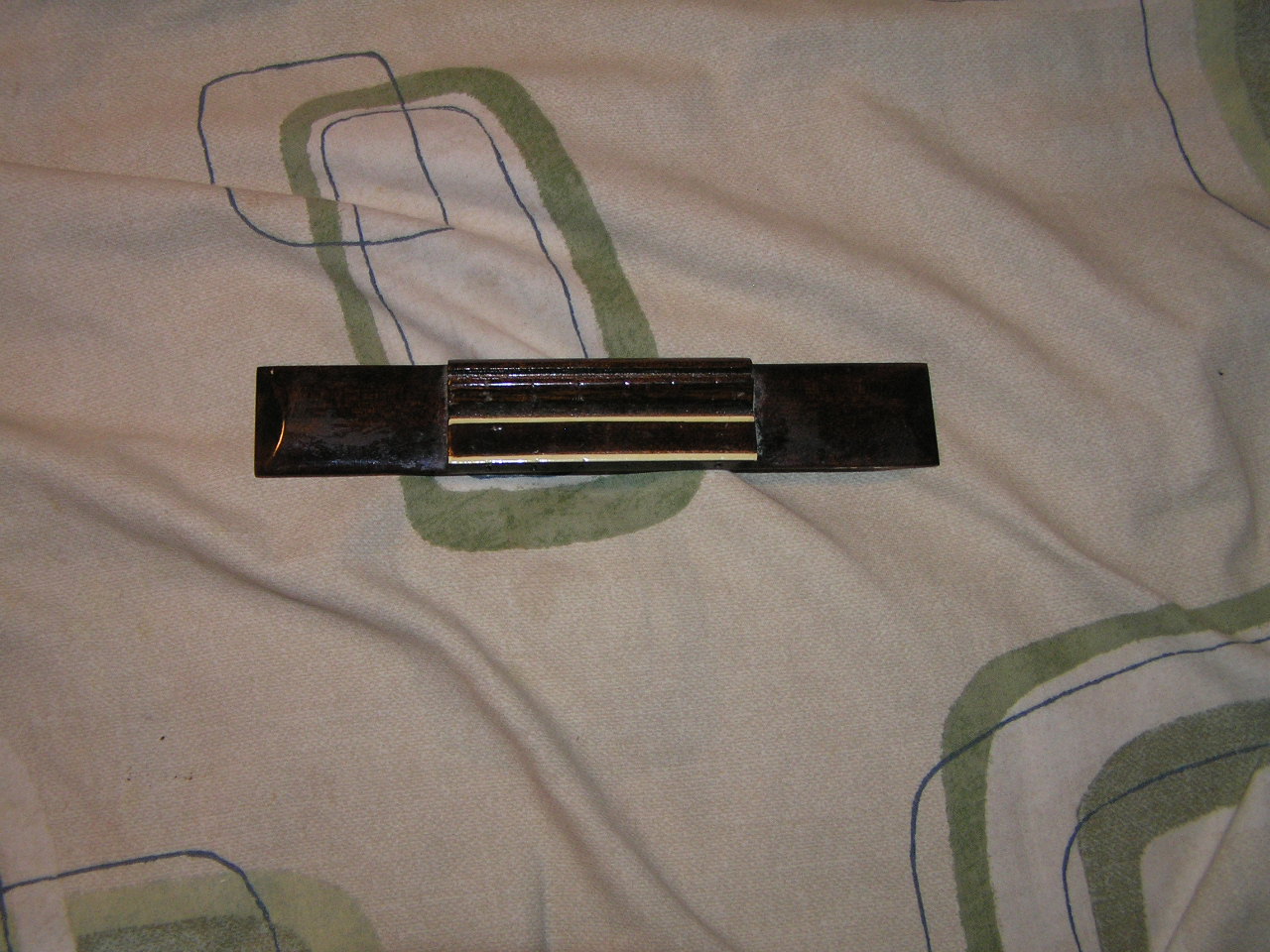
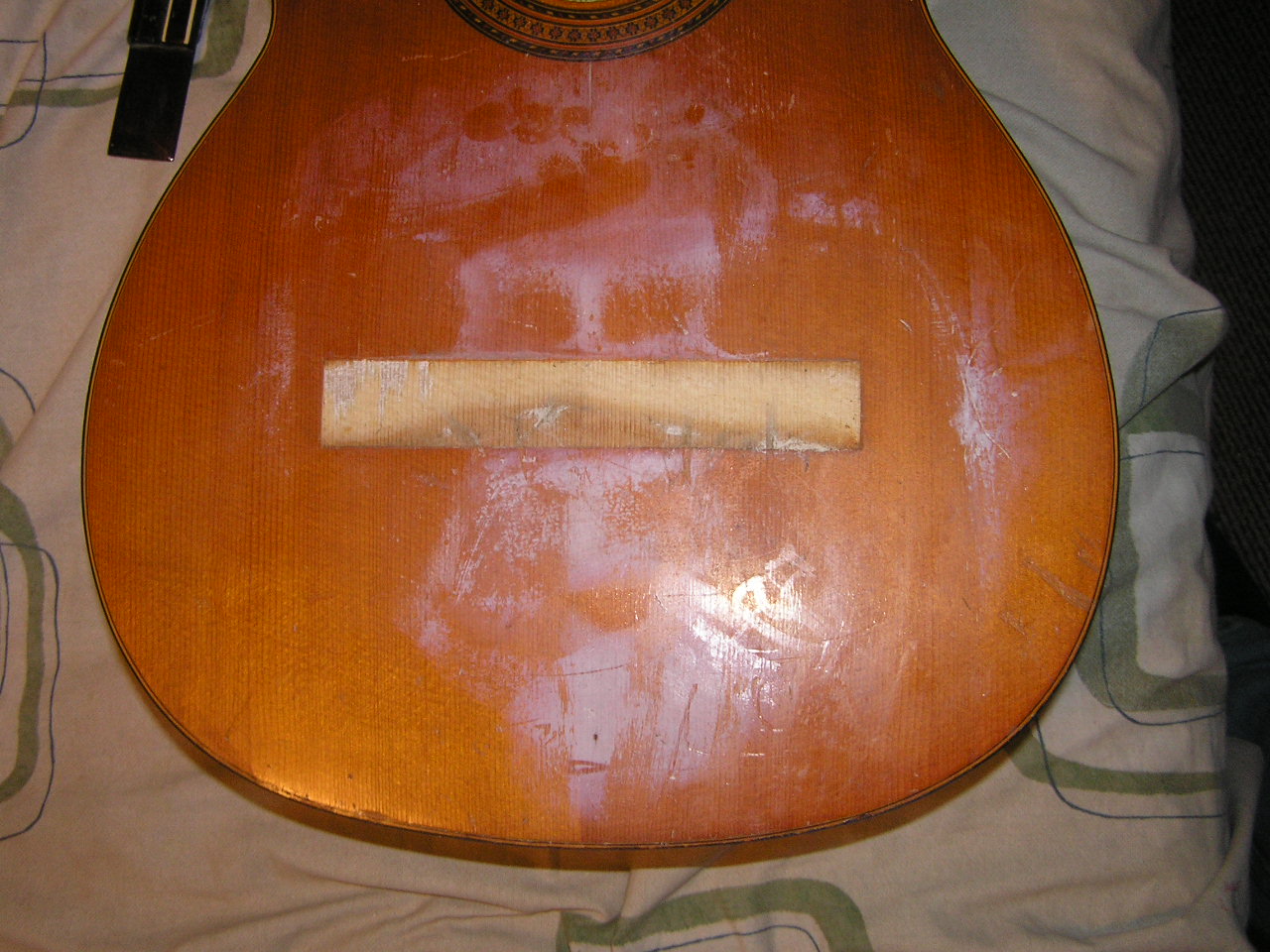 The soundboard has so many digs, dents and scratches that I decided to completely remove the lacquer from it and wax it. I have finished rubbing the soundboard down and after steaming the bridge and flattening it out I have now glued the bridge in place and currently am waiting for the glue to fully set, so it will be left until tomorrow with the clamp on it.
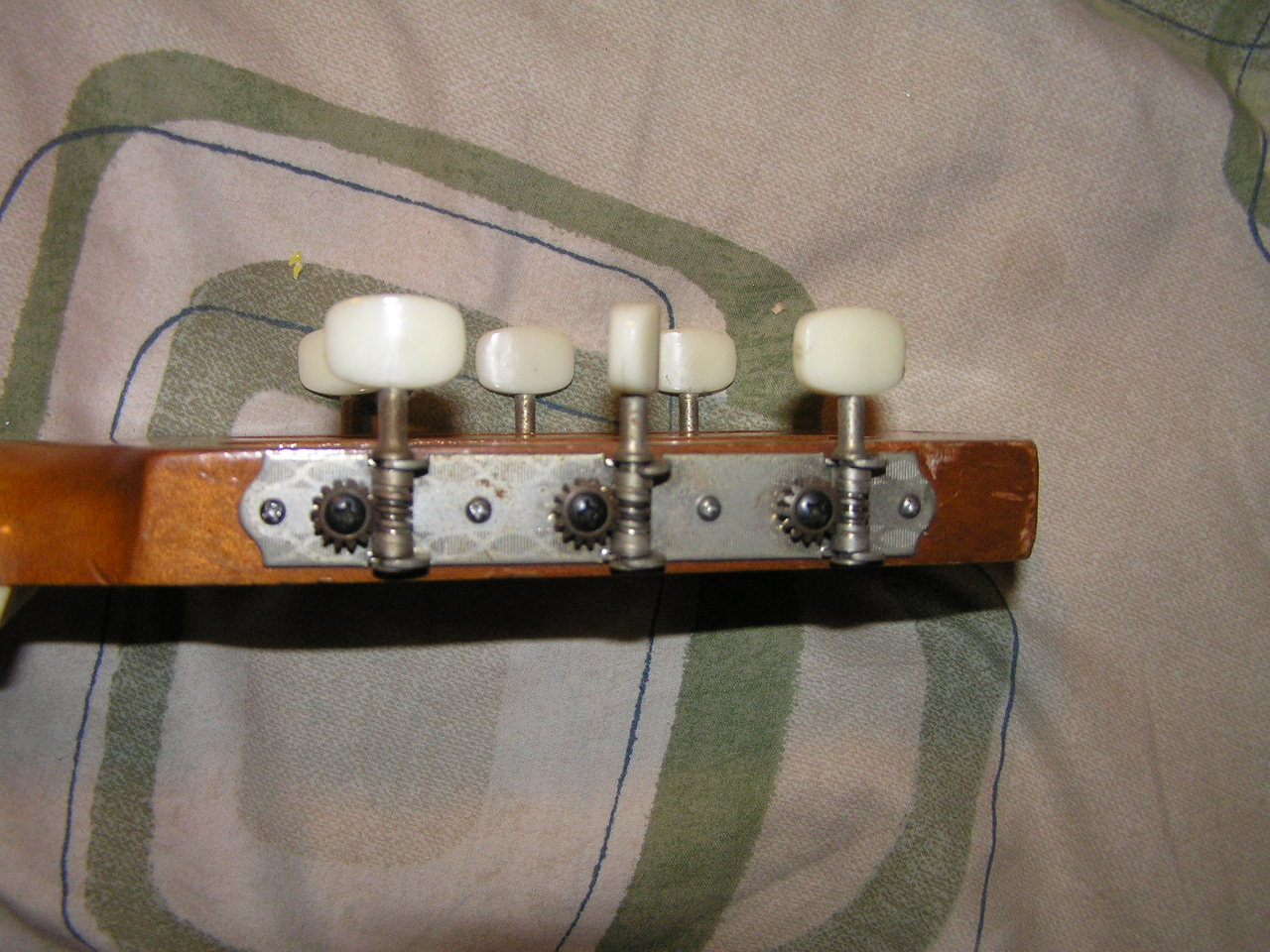 The machine heads are of very poor quality and have a lot of play in them. If the guitar comes out okay then the intention is to put new machine heads on it. Also the frets from 13 to 19 inclusive have corroded, all the frets look like they are made of brass, I was going to change the frets but I don’t think I will now. I will clean up the 13 to 19 frets as best I can and the first 12 frets are not in too bad a condition and it is only the first 12 frets that are used when playing this guitar.
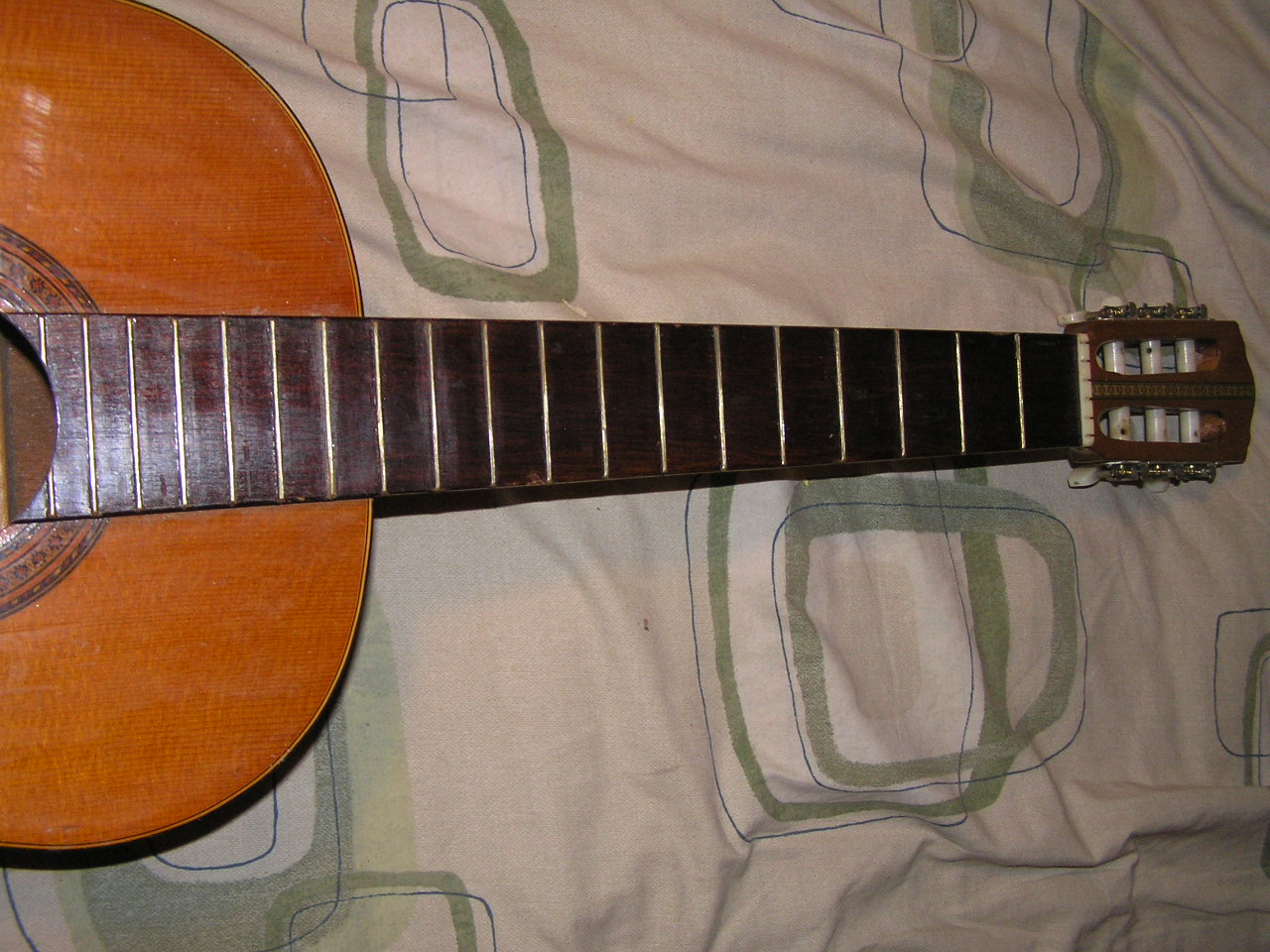 Having given this guitar a good look over it appears that it is veneered on the back, sides and soundboard. I had to go pretty carefully when rubbing down the front as it would be quite easy to go right through the veneer. I imagine that a guitar the same as this one in mint condition would be quite collectable. I have a love of guitars and personally don’t really care much about what they are worth as collectables.
I will post more on this guitar when it is finished.